Mental health essays

Understanding The Japanese Philosophy Of Omoiyari

Omoiyari involves compassion and empathy in Japanese society with deep nuances.

Empathy and compassion are generally considered two of the most valuable personality traits to have. To be truly empathetic is to understand the needs of someone else and to be compassionate is to act in such a way that empathy is shown. When those traits are viewed through a Japanese lens, they take on more nuance.

The Japanese philosophy of omoiyari is the expression of empathy and compassion. And yet, there is much more than a surface level understanding of those words when implemented in Japan.

Continue reading “Understanding The Japanese Philosophy Of Omoiyari”

Mental health essays · Pop Culture and Japan

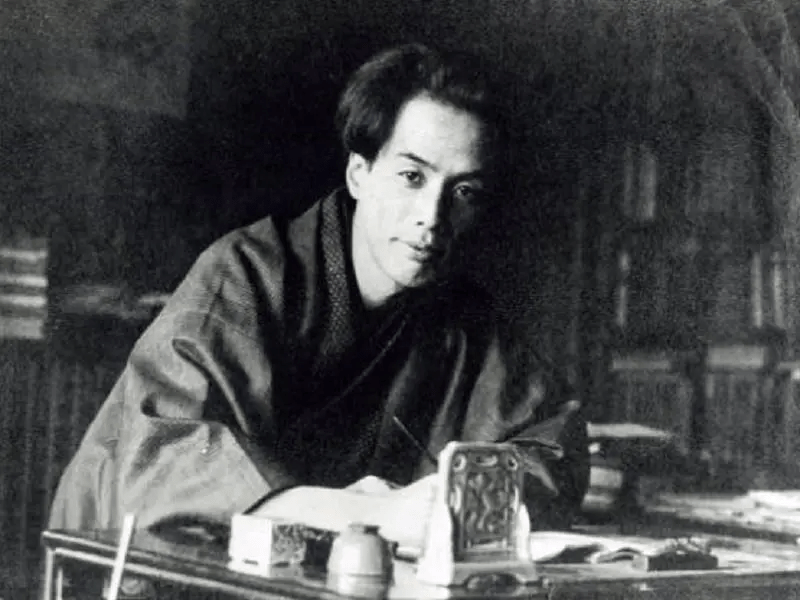
The Father Of Japanese Short Stories & The Man-Made Wings Of Mental Health

There was once a man who flew too high to the sun. Not the sun as you and I know it, it was a sun of his own making, the distant light of intellect that he wished with all his heart to grasp for, but always seemed obscured by the darkness that he carried inside of himself. He was 29 years old when he chose to soar into the sky, to search for the brightness he couldn’t find in his life.

He built his wings off the backs of philosophers like Rousseau and Voltaire, philosophers who revealed the contradictions of his soul. On one side, he embodied the passion for humanity, the yearning for freedom of the former. On the other side, he embraced the unshakeable belief that unchecked optimism was something to laugh at, as the latter intended.

Painfully aware of the contradictions, the man found relief in the sky. The closer he got to the sun, the closer he got to himself. His true self. The self that wanted to live with such intensity that he could die without regret. But in the back of his mind, he couldn’t shake the image of being a comic puppet, dangling by the strings of the universe. For a fleeting moment, he’d been cut free, and all the responsibilities of his life seemed so small and inconsequential, somewhere far below him. His aunt. His wife. His children. His family. They were all very far away.

He didn’t know how long he went on flying. Or if he ever reached the sun. The wind screeched in his ears and a single thought flashed through his mind: It is unfortunate for the gods that, unlike us, they cannot commit suicide.

Continue reading “The Father Of Japanese Short Stories & The Man-Made Wings Of Mental Health”

Mental health essays

The Mechanics Of Japanese Mastery: Shu-Hai-Ri

Shu-Hai-Ri essay by Jamie Ryder.

In Japanese culture, the relationship between studentship and mentorship is an important societal pillar. This dynamic is shown within different martial arts styles, underpinned by a network of constructs. And a lynchpin for these constructs is the idea of shu-hai-rai.

Shu-hai-ri refers to the process of learning a skill and becoming a master. While its origins is rooted in martial arts, the idea is relatable to other areas of life as we’ll see.

Continue reading “The Mechanics Of Japanese Mastery: Shu-Hai-Ri”

Mental health essays

Gemba – The Science Of Japanese Productivity

Gemba essay by Jamie Ryder.

Japanese work culture is made up of several concepts that are meant to champion collaboration, communication and productivity, all with varying results. One of the most prominent is gemba, which has its origins in lean manufacturing. 

Translating to ‘the actual place’ gemba has several dimensions that will be explored in this article.

Continue reading “Gemba – The Science Of Japanese Productivity”

Mental health essays

Zuihitsu – How To Follow The Brush Of Your Writing Inspiration

Zuihitsu essay by Jamie Ryder.

Japan has a rich, creative history, dating all the way back to the Heian period (794 – 1185). This was a time when creative practices were the highest expression of what a person was capable of – poetry, calligraphy and art were all prized. 

Japanese nobility were expected to excel in every creative arena they stepped into and there are plenty of takeaways that we can apply for our own use today. A specific creative practice that I enjoy is zuihitsu, meaning to follow the brush. 

Continue reading “Zuihitsu – How To Follow The Brush Of Your Writing Inspiration”

Japanese Cuisine · Mental health essays

Itadakimasu And The Ritualisation Of Japanese Food

Itadakimasu essay by Jamie Ryder.

It’s 2015. Shoryu, a popular Japanese ramen chain, is opening in Manchester. I’m ready to find the meaning of life at the bottom of a bowl of ramen and when I walk through the door, I hear the phrase itadakimasu! and the banging of a drum. I don’t really think much of the word until the drum bangs again and I hear it repeated for the next customer. And the next customer. And the next customer.

Since then, I’ve been back to Shoryu several times and I continue to search for the meaning of a life at the bottom of every bowl of ramen. But it’s not the only thing that’s stuck with me. Itadakimasu is a word that captures a lot with a little, a proclamation of what Japanese food is or can be. 

Continue reading “Itadakimasu And The Ritualisation Of Japanese Food”

Mental health essays

The Mask Of Majime – What Is The Price Of Extreme Politeness?

Majime essay by Jamie Ryder.

A major stereotype of Japanese culture is an overwhelming seriousness, encapsulated in the concept of majime. This translates to seriousness or soberness, implying a lack of emotion and straight-facedness linked to the working world. The personification of majime is the salary man who works long hours, spends all his life in one job and sees his tenure as a badge of honour, an emblem to be wielded as fiercely and as proudly as a samurai with his katana.

But is majime a stereotype or can it have certain benefits when looked at from the wider perspective of Japanese culture? Let’s explore that in more detail and see what that looks like from a mental health perspective. 

Continue reading “The Mask Of Majime – What Is The Price Of Extreme Politeness?”

Mental health essays

Can We Develop Healthier Eating Habits With Kuchisabishii?

Kuchisabishii essay by Jamie Ryder.

It’s a Friday night. You’ve had a long week at work and you’ve already eaten plenty that day. But you have a craving for pizza, even though you know you’re full in the sense of getting all your calories and basic human needs satisfied. You know you aren’t ‘hungry’ in the ‘I’m-starving-not-actually-starving-life-or-death’ kind of way that gets said so much it’s a first world cliche (especially if you’re from the UK). 

You order the pizza anyway because the craving demands it. And once you’ve finished, all you can think is why did I eat that goddamn pizza? I wasn’t even hungry.

If that sounds familiar, then maybe it’s time to embrace the concept of kuchisabishii. This Japanese concept roughly translates as ‘lonely mouth.’ But rather than it being a damnation of mindless eating, kuchisabishii offers a reframing of why we eat when we’re bored or sad. 

Continue reading “Can We Develop Healthier Eating Habits With Kuchisabishii?”

Mental health essays

Tsundoku – The Art Of Never Reading Books

Tsundoku essay by Jamie Ryder

For as long as I can remember, my life’s been filled with books. Crime novels, fantasy epics, philosophy texts, historical narratives and subjects with only a passing interest. Some books I’ve read multiple times, others I’ll never touch again and will probably keep gathering dust on the shelves.

Maybe for you it’s different. Maybe you stack your shelves with books you’ll never read once. And that’s okay. There’s a term for that in Japanese called tsundoku, which means collecting books that pile up in the home and won’t ever be read. 

But at its core what does tsundoku represent? The habits of a hoarder? The preening of a pseudo-intellectual? Let’s answer those questions in my third essay on an exploration of Japanese mental health concepts.

Continue reading “Tsundoku – The Art Of Never Reading Books”