Japanese Fashion · Pop Culture and Japan

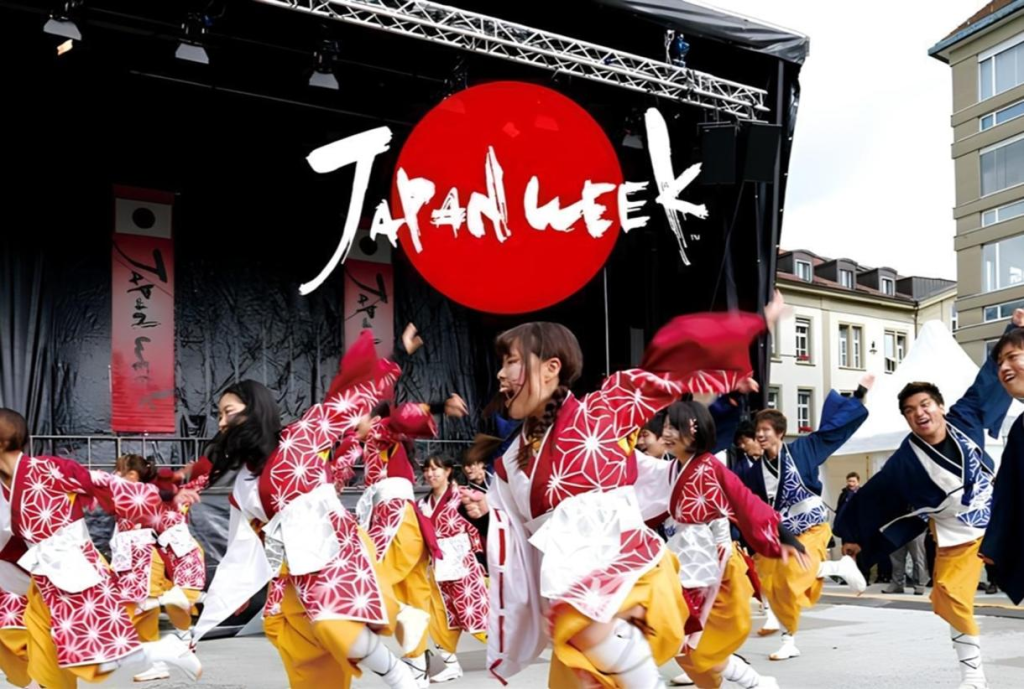
Celebrating Japan Week 2025 In Manchester

Japan Week 2025 in Manchester is a historical event that further strengthens the ties between Manchester and Japan.

The city of Manchester and Japan have a special connection. This dates back to 1865 at the height of the Industrial Revolution, when a group of students from Satsuma came to Greater Manchester to investigate the booming cotton trade. The students visited manufacturers in the region of Oldham called the Platt Brothers and were so impressed by the machinery that they took it back with them. 

This was the start of a strong and fruitful working relationship. Over the next century and a half, Manchester would continue to build strong ties with Japan. A more recent example is Manchester mayor Andy Burnham being part of an initiative and UK delegation to Japan to establish further bonds of urban development and carbon remission. In fact, Manchester has become the sister city to Osaka and the two mirror each other in terms of aspirations, people and world views.

As a proud Manc, I’m excited to see my city’s connection with Japan continue to flourish. And as a celebration of this connection, Japan Week 2025 in Manchester is sure to be amazing. Taking place across the city from September 4th – September 9th, here are the events you’ll want to check out.

Continue reading “Celebrating Japan Week 2025 In Manchester”
Pop Culture and Japan

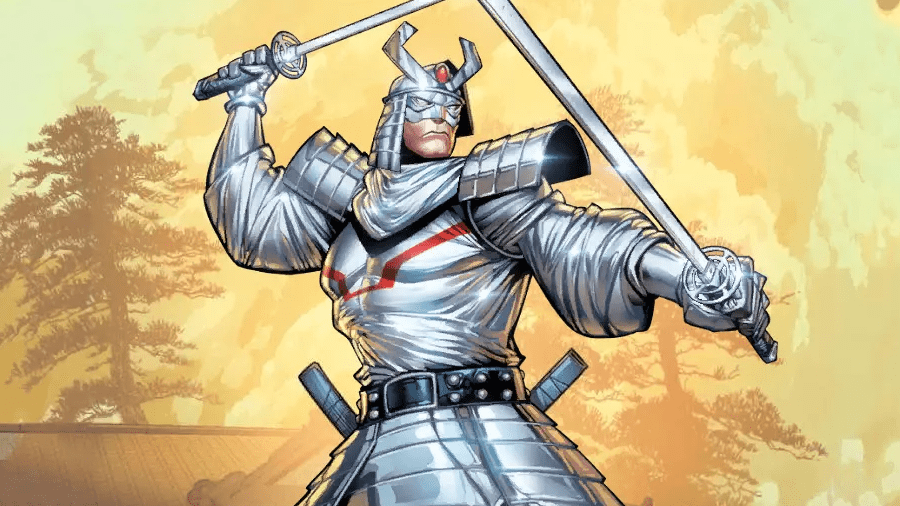
How Does The Silver Samurai Break The Mould Of The Traditional Samurai Image?

Samurai are traditionally depicted as brave warriors who value honour and duty. They were known to serve their masters loyally, to lay down their lives and sacrifice everything in the pursuit of bushido. Marvel Comics has done a great job of emphasising Japanese culture, with the Silver Samurai representing a traditional image. The identity has been used by two characters, though it has been linked with dishonour, due to the original bearer of the identity, Kenuichio Harada, starting off as a villain. Over time, Harada looked to regain his honour.

Let’s look into the history of the Silver Samurai to see how his identity contrasts with conventional Japanese imagery.

Continue reading “How Does The Silver Samurai Break The Mould Of The Traditional Samurai Image?”

Pop Culture and Japan

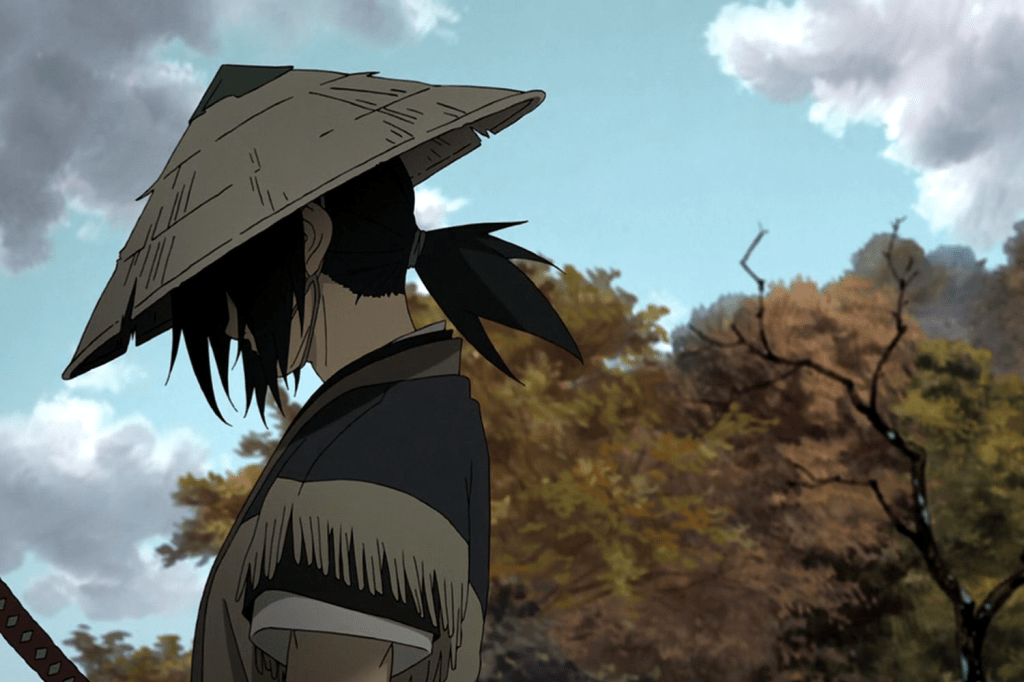
The Truth About Real Samurai In Anime

Samurai are some of the most iconic figures in Japanese history. They’ve appeared in films,
games, books, and especially anime. But anime often bends the truth.

Real samurai lived by strict codes, fought deadly battles and shaped Japan’s future. Anime
samurai? They shoot lightning, ride motorcycles and sometimes travel through time. This article breaks down how anime reimagines real historical samurai. We’ll compare fact vs. fiction and see why the truth is sometimes even more interesting than the fantasy.

Continue reading “The Truth About Real Samurai In Anime”

Pop Culture and Japan

Japanese Writing for Beginners: Learn Hiragana & Katakana

For newcomers to the Japanese language, the writing system often appears as an intimidating barrier. Unlike languages that use the Latin alphabet, Japanese employs three distinct writing systems simultaneously: hiragana, katakana, and kanji. But don’t let this complexity discourage you! With the right approach and resources, mastering Japanese writing can be an enjoyable journey. In this guide, we’ll focus on the first crucial step: learning hiragana and katakana.

Continue reading “Japanese Writing for Beginners: Learn Hiragana & Katakana”

Pop Culture and Japan

The One-Eyed Dragon And Walking Your Own Path

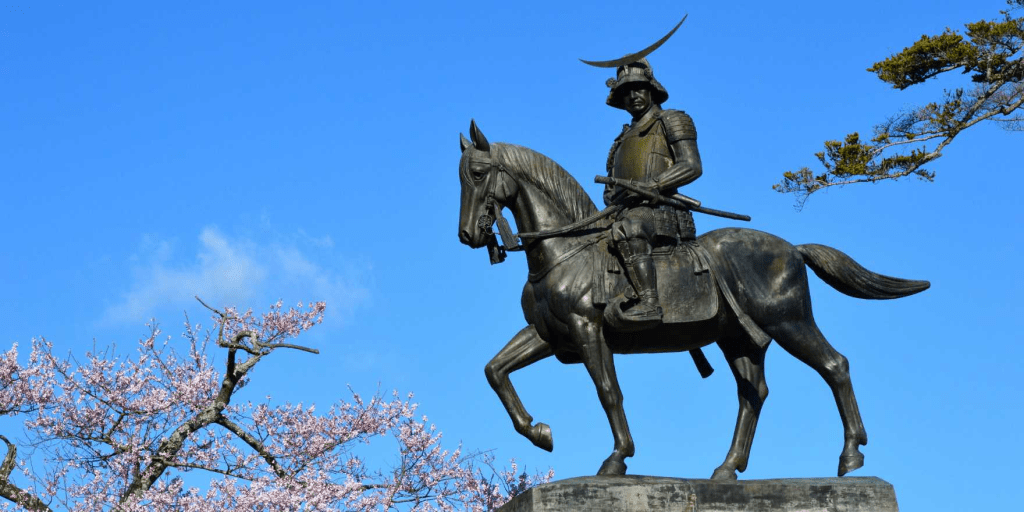
A young man glared at his reflection in the mirror. The reflection, half-obscured by a mane of thick black hair, glared back. The young man swept his hair out of his face, determined to face himself. Through distorted vision, he saw a boy with a bulging eye, a boy who was jeered, ridiculed, looked down upon as an abomination even by his own mother. A boy who’d been named the leader of his clan and who everyone expected to fail.

The young man continued to repeat the mantra he’d been telling himself again and again: You are Botenmaru no more. Your name is Date Masamune. Son of Tenamune. The right to lead this clan is yours by birth. Kill the boy and let the man be born.

Continue reading “The One-Eyed Dragon And Walking Your Own Path”

Pop Culture and Japan

This Japanese Philosopher Helped To Change The History Of Japan

The Enlightenment of the seventeenth and eighteenth centuries is marked as a watershed moment in Western history. An age of reason and scientific discovery, it gave rise to new ways of thinking, solidified the reputations of intellectuals like Isaac Newton and Voltaire and cast away the metaphorical blackness and superstition of the Dark Ages.

A century later, Japan went through its own Enlightenment, gathering knowledge from the West and building itself into a world superpower within a relatively short amount of time. The Japanese Enlightenment period of the nineteenth century was an era of radical thinkers and intellectual wayfarers, explorers who were willing to throw caution to the wind and expose themselves to alien cultures on behalf of their country. A man who was critical to shaping modern Japan was a key figure in this period. His name was Fukuzawa Yukichi.

A philosopher, writer, statesman, teacher and entrepreneur, Fukuzawa became a bridge between worlds for transmuting Western ideas into a Japanese mindset. He built his philosophy upon the nature of civilisation, identity and freedom, a philosophy that’s been grafted into the infrastructure of modern Japanese society.

Continue reading “This Japanese Philosopher Helped To Change The History Of Japan”

Pop Culture and Japan

Shadow Games

Kyoto. The seat of power in Japan. A seat ripe for the taking for those who have the will and strength. Katashi, a general in the service of the great daimyo Oda Nobunaga, muses that his lord will soon be sitting in that seat.

Katashi has spent the last day in the city gathering intelligence, getting the lie of the land and listening for the movements of other warlords roaming throughout the countryside, enemies of the Oda who would take everything the clan has fought to build. Two names continue to rise the highest among the din: Takeda Shingen, the Tiger of Kai, and Uesugi Kenshin, the Dragon of Echigo. Both men aren’t to be underestimated and Katashi plans to deliver news of their movements to Nobunaga. As soon as he’s finished enjoying all the pleasures the city has to offer on his week-long stay.

A man of large appetites, the general struts through the pleasure district of Kyoto with his men, drinking their way through tavern after tavern. After a while, Katashi directs them towards a brothel and as they stagger into the place, the general calls to the madam to show him her wares.

Continue reading “Shadow Games”

Pop Culture and Japan

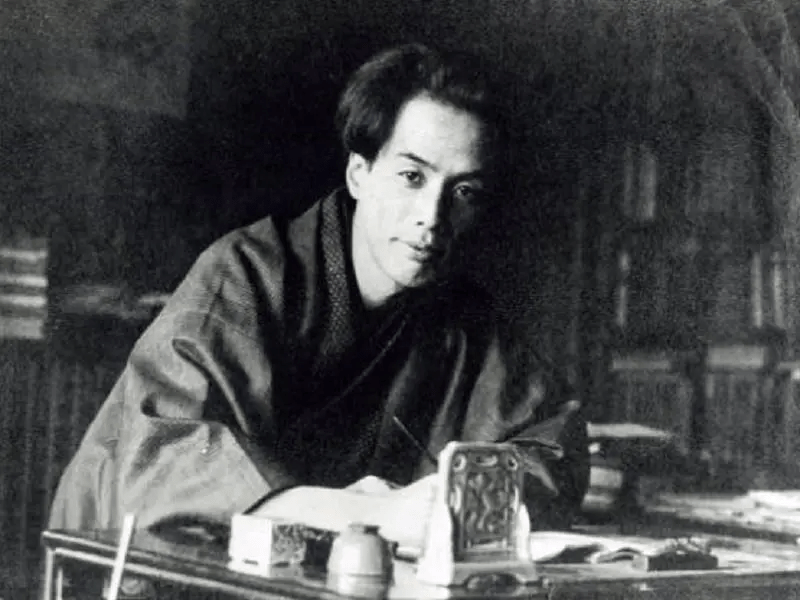
Copywriting Lessons From The Father Of Japanese Short Stories

He was upstairs in a bookstore.

Twenty years old at the time, he had climbed a ladder set against a bookcase and was searching for the newly-arrived Western books: Maupassant, Baudelaire, Strindberg, Ibsen, Shaw, Tolstoy…

This is the opening paragraph of a short story called The Life Of A Stupid Man by Ryunosuke Akutagawa.

This paragraph hooked me into the work of the father of the Japanese short story because of the author’s vulnerability.

His short stories offer several mental health and creative insights:

Continue reading “Copywriting Lessons From The Father Of Japanese Short Stories”

Mental health essays · Pop Culture and Japan

The Father Of Japanese Short Stories & The Man-Made Wings Of Mental Health

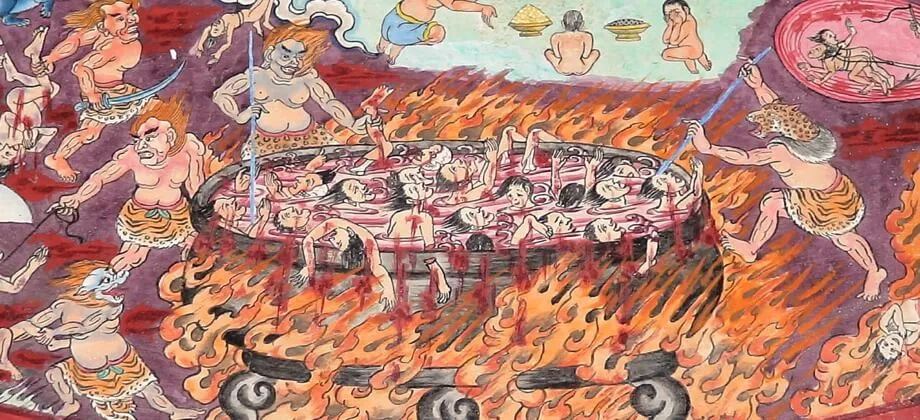
There was once a man who flew too high to the sun. Not the sun as you and I know it, it was a sun of his own making, the distant light of intellect that he wished with all his heart to grasp for, but always seemed obscured by the darkness that he carried inside of himself. He was 29 years old when he chose to soar into the sky, to search for the brightness he couldn’t find in his life.

He built his wings off the backs of philosophers like Rousseau and Voltaire, philosophers who revealed the contradictions of his soul. On one side, he embodied the passion for humanity, the yearning for freedom of the former. On the other side, he embraced the unshakeable belief that unchecked optimism was something to laugh at, as the latter intended.

Painfully aware of the contradictions, the man found relief in the sky. The closer he got to the sun, the closer he got to himself. His true self. The self that wanted to live with such intensity that he could die without regret. But in the back of his mind, he couldn’t shake the image of being a comic puppet, dangling by the strings of the universe. For a fleeting moment, he’d been cut free, and all the responsibilities of his life seemed so small and inconsequential, somewhere far below him. His aunt. His wife. His children. His family. They were all very far away.

He didn’t know how long he went on flying. Or if he ever reached the sun. The wind screeched in his ears and a single thought flashed through his mind: It is unfortunate for the gods that, unlike us, they cannot commit suicide.

Continue reading “The Father Of Japanese Short Stories & The Man-Made Wings Of Mental Health”

Japanese Mythology · Pop Culture and Japan

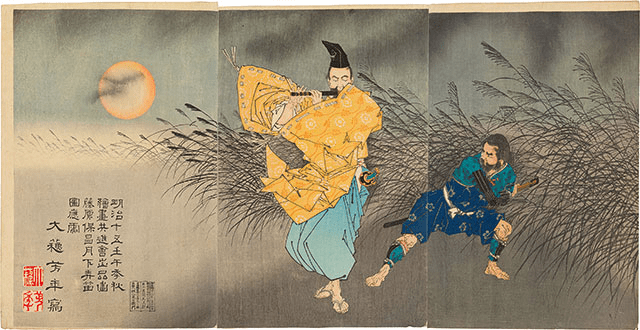
The Last Ukiyo-e Painter & The Fight For Preservation

This is a chapter from my book Japanese Fighting Heroes: Warriors, Samurai and Ronins. Pick up a copy here.

I love art. Walking around galleries and observing paintings is not only a therapeutic exercise, it’s an opportunity to soak up a piece of the artist’s story. Art is a window into the mind of the person who created it and their essence is left behind in the subject matter.

Japan has no shortage of wonderful art and Japanese ukiyo-e is my favourite genre for the distinctive style and beauty that goes into making it. Translating to pictures of the floating world, ukiyo-e are woodblock paintings and scenes that depict the pleasure districts, geisha, actors, wrestlers and decadence of the Edo period.

This style of art flourished for hundreds of years until it faded with the hero of this chapter: Tsukioka Yoshitoshi. Considered to be the last of the great masters, Yoshitoshi kept ukiyo-e alive for as long as he could against an invasion of Western technology and disciplines like photography and lithography. Before we visit the end of ukiyo-e, we must go back to the start.

Continue reading “The Last Ukiyo-e Painter & The Fight For Preservation”