Japanese Mythology · Pop Culture and Japan

The Last Ukiyo-e Painter & The Fight For Preservation

This is a chapter from my book Japanese Fighting Heroes: Warriors, Samurai and Ronins. Pick up a copy here.

I love art. Walking around galleries and observing paintings is not only a therapeutic exercise, it’s an opportunity to soak up a piece of the artist’s story. Art is a window into the mind of the person who created it and their essence is left behind in the subject matter.

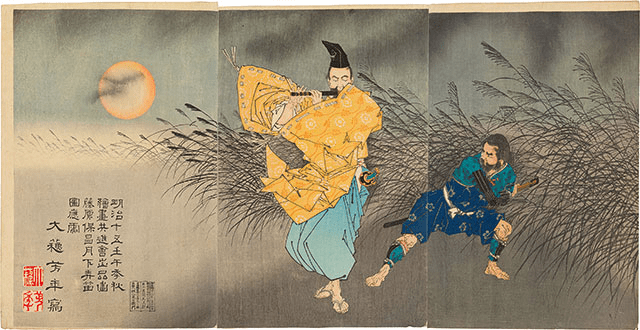
Japan has no shortage of wonderful art and Japanese ukiyo-e is my favourite genre for the distinctive style and beauty that goes into making it. Translating to pictures of the floating world, ukiyo-e are woodblock paintings and scenes that depict the pleasure districts, geisha, actors, wrestlers and decadence of the Edo period.

This style of art flourished for hundreds of years until it faded with the hero of this chapter: Tsukioka Yoshitoshi. Considered to be the last of the great masters, Yoshitoshi kept ukiyo-e alive for as long as he could against an invasion of Western technology and disciplines like photography and lithography. Before we visit the end of ukiyo-e, we must go back to the start.

Continue reading “The Last Ukiyo-e Painter & The Fight For Preservation”

Pop Culture and Japan

Kika Sai

The Kimura Brewery blossomed with the aroma of steamed rice escaping from the fermentation tanks. To Mariko, it was the smell of a new sake season, of memories, of simpler days brought to life. She strolled by the tanks, making conversation with the kurabito, asking how they were and the health of their families.

No member of the team was left out. Mariko stopped by the koji room and had the familiar sensation of stepping into a sacred place. The heat inside the room felt pleasant on her skin, like basking in an onsen bath. The workers bowed politely in greeting and she returned the gesture, indicating that they could continue.

Each man worked in union, walking up and down the line of trays, sprinkling mould onto the rice in perfect synchronicity.

It was like watching a graceful dance unfold, every movement choreographed to the rhythm of music only the men could hear. Her ritual complete, Mariko went to the upper floor of the brewery to her office.

Continue reading “Kika Sai”

Sake Reviews

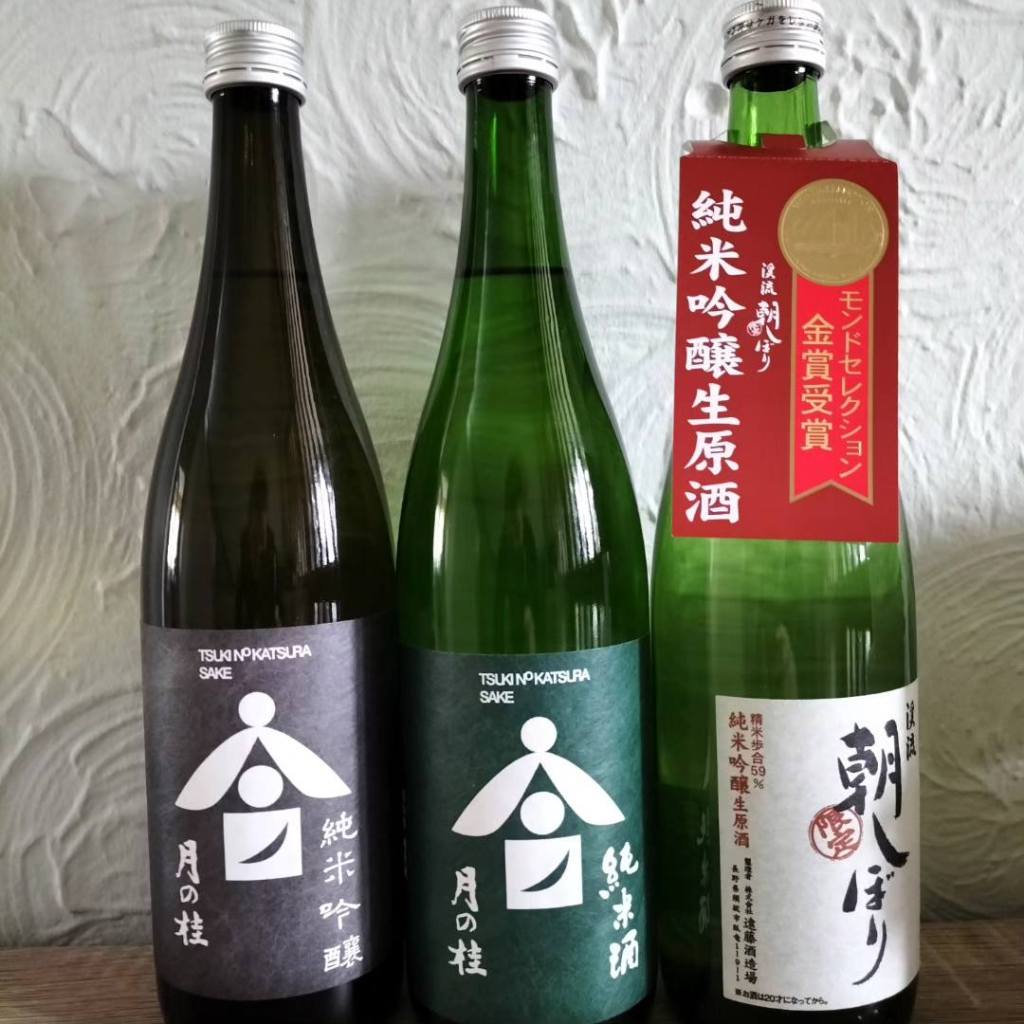
Sake Flight Review Featuring Tsuki No Katsura and Endo Brewery

Sake from the Tsuki no Katsura and Endo breweries.

As a qualified sake sommelier and international kikisakeshi, I always find it worthwhile to continue to further my Japanese drinks education. Thanks to the kind folks over at Taste of Japan, I have some new bottles to work through and here are three of my favourites from the Taste of Japan range.

Continue reading “Sake Flight Review Featuring Tsuki No Katsura and Endo Brewery”

Pop Culture and Japan · Women Warriors

The Thunderbird And The Fight For Women’s Rights

A chapter about the Japanese feminist Hiratsuka from Jamie Ryder's Japanese Fighting Heroes.

In my home city of Manchester, there’s a statue of the influential feminist and activist Emmeline Pankhurst. She was a key figure in the Suffragette movement, fighting for women’s rights alongside Emily Davison, Dora Thewlis and many other women across Europe during the late nineteenth and early twentieth centuries.

The suffragette movement swept the western world, smashing traditions and upsetting the status quo and we can’t overlook the fact that it didn’t stop in Europe or the US. A world away in Japan, women were campaigning for their right to be seen as human beings in a society that had arguably even more restrictions than the west, with women like Hiratsuka Raicho leading the charge.

A pioneering feminist in Japan, Raicho shook the foundations of her country with the same force as Pankhurst did in the UK. Her character, strength and willpower are contained within the first issue of a feminist magazine she founded called Seito (Bluestocking): ‘In the beginning, woman was the sun. An authentic person. Now she’s the moon, a wan and sickly moon, dependent on another, reflecting another’s brilliance.’

Continue reading “The Thunderbird And The Fight For Women’s Rights”

Mental health essays

The Mechanics Of Japanese Mastery: Shu-Hai-Ri

Shu-Hai-Ri essay by Jamie Ryder.

In Japanese culture, the relationship between studentship and mentorship is an important societal pillar. This dynamic is shown within different martial arts styles, underpinned by a network of constructs. And a lynchpin for these constructs is the idea of shu-hai-rai.

Shu-hai-ri refers to the process of learning a skill and becoming a master. While its origins is rooted in martial arts, the idea is relatable to other areas of life as we’ll see.

Continue reading “The Mechanics Of Japanese Mastery: Shu-Hai-Ri”

Mental health essays

Gemba – The Science Of Japanese Productivity

Gemba essay by Jamie Ryder.

Japanese work culture is made up of several concepts that are meant to champion collaboration, communication and productivity, all with varying results. One of the most prominent is gemba, which has its origins in lean manufacturing. 

Translating to ‘the actual place’ gemba has several dimensions that will be explored in this article.

Continue reading “Gemba – The Science Of Japanese Productivity”

Mental health essays

Zuihitsu – How To Follow The Brush Of Your Writing Inspiration

Zuihitsu essay by Jamie Ryder.

Japan has a rich, creative history, dating all the way back to the Heian period (794 – 1185). This was a time when creative practices were the highest expression of what a person was capable of – poetry, calligraphy and art were all prized. 

Japanese nobility were expected to excel in every creative arena they stepped into and there are plenty of takeaways that we can apply for our own use today. A specific creative practice that I enjoy is zuihitsu, meaning to follow the brush. 

Continue reading “Zuihitsu – How To Follow The Brush Of Your Writing Inspiration”

Japanese Cuisine · Mental health essays

Itadakimasu And The Ritualisation Of Japanese Food

Itadakimasu essay by Jamie Ryder.

It’s 2015. Shoryu, a popular Japanese ramen chain, is opening in Manchester. I’m ready to find the meaning of life at the bottom of a bowl of ramen and when I walk through the door, I hear the phrase itadakimasu! and the banging of a drum. I don’t really think much of the word until the drum bangs again and I hear it repeated for the next customer. And the next customer. And the next customer.

Since then, I’ve been back to Shoryu several times and I continue to search for the meaning of a life at the bottom of every bowl of ramen. But it’s not the only thing that’s stuck with me. Itadakimasu is a word that captures a lot with a little, a proclamation of what Japanese food is or can be. 

Continue reading “Itadakimasu And The Ritualisation Of Japanese Food”