For as long as I can remember, my life’s been filled with books. Crime novels, fantasy epics, philosophy texts, historical narratives and subjects with only a passing interest. Some books I’ve read multiple times, others I’ll never touch again and will probably keep gathering dust on the shelves.
Maybe for you it’s different. Maybe you stack your shelves with books you’ll never read once. And that’s okay. There’s a term for that in Japanese called tsundoku, which means collecting books that pile up in the home and won’t ever be read.
But at its core what does tsundoku represent? The habits of a hoarder? The preening of a pseudo-intellectual? Let’s answer those questions in my third essay on an exploration of Japanese mental health concepts.
Tsundoku sensei
The origin of tsundoku comes from the Meiji period (1868 – 1912) or perhaps earlier. According to the writer Mori Senzo, the phrase tsundoku sensei appeared in 1879, representing a teacher who had lots of books but never read them. While this might sound like an insult, the phrase has no pejorative meaning. Indeed, the act of tsundoku can have positive traits.
Crucially, the concept is different from bibliomania, which is the unfettered collection of rare books like first editions. Tsundoku has intentionality behind it. It’s the awareness of gathering books and finding a home for them or of reading them in the future. It’s not hoarding for the sake of hoarding or collecting for the sake of collecting.
With that in mind, there are several ways for tsundoku to be applied:
- Buying books and being deliberate with how they are read. One day you may decide to read a few chapters from a novel and put the book down. The next day you move on to a non-fiction book with the intention of being inspired in your day to day. Then, you switch because to the novel for the storytelling aspect.
- You buy a book from an independent publisher and store it. You’re contributing to the livelihoods of a business you want to help and of the author.
- You buy a book, store it for a certain amount of time and then donate it to a charity shop. Your home is a waystation for the book as it passes into the hands of someone who is more likely to benefit from its content.
Anti-libraries
Another way to view tsundoku is through the idea of an ‘antilibrary.’ This phrase was coined by Nassim Nicholas Taleb in his work The Black Swan: The Impact of the Highly Probable. For Taleb, an antilibrary acted as a reminder to gather more knowledge and to remain curious. A large collection of books doesn’t have to represent how much someone knows, but their pursuit of knowing more.
Taleb points out the life of the author Umberto Eco, who had a collection of 30,000 books. Most assumed that the books symbolised the impressive sum of Eco’s knowledge. What it really showed was Eco’s desire to keep on learning.
Taleb writes “Read books are far less valuable than unread ones. Your library should contain as much of what you do not know as your financial means, mortgage rates, and the currently tight real-estate market allows you to put there. You will accumulate more knowledge and more books as you grow older, and the growing number of unread books on the shelves will look at you menacingly. Indeed, the more you know, the larger the rows of unread books. Let us call this collection of unread books an antilibrary.”
So, choosing to collect a lot of books and not read them can be about putting your ego in place. Your book collection doesn’t have to be a trophy you break out as a mental masturbation exercise. It’s a way of staying humble and building a living resource of topics you don’t know the first thing about. A celebration and demand for curiosity.
At the time of writing this in early 2024, I’ve become more curious about finance and real estate. Recent additions to my book collection include The Intelligent Investor, The Mandiles: A Family, 2029 – 2047 and Real Estate Investing 101: A Crash Course In Building Wealth.
Do I have a desire to become an expert in these topics? Not really. Will I ever fully understand the complex matters that go on in these industries? Hell no. Will I come back to reading these books in the future? Hard to say.
But as I look at these books on my shelf, I’m aware of the enjoyment I feel in learning new things step by step. I’m conscious that things I used to find dry and boring have become more practical and useful.I’m filled with new ideas and writing inspiration. I’m prompted to reach out to people who know more than me and ask for their help.
Of course, there’s always a danger of book buying tipping into hording and recognising the signs of that goes beyond the constraints of this essay. What tsundoku can teach is the enjoyment of being curious and self-compassionate over buying loads of books that you’ll never read.
Now, go out there and be your own tsundoku sensei.
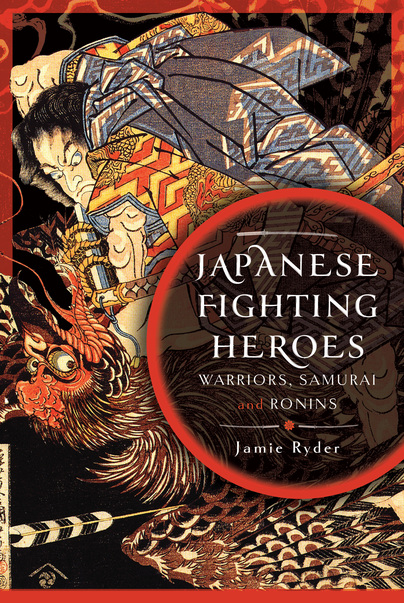
And while you’re at it, you could buy my book Japanese Fighting Heroes. The book champions some of Japan’s most famous figures like Miyamoto Musashi and Fukuzawa Yuckichi.
You don’t have to read it either. Collect it, store it and pass it on to someone in your network in the tsundoku spirit.

 yamatomagazine.home.blog
One thought on “Tsundoku – The Art Of Never Reading Books”