Poetry

Fatherhood

When you’re in the world
I will be your protector
As a samurai
protects what matters the most
Even when I don’t
have all the answers for you
I will have questions
To find meaning together
On the winding road
You’ll walk to uncertain ends
Like a katana
You’ll be forged imperfectly
Full of golden cracks
Shining in kintsugi soul
I will say to you
That the world isn’t to be feared
That it is a place
To find what matters the most
There will be long nights
You’ll want to hide away from
I will hide with you
Long enough to see the dawn
All darkness passes
You can be more than one thing
The best of two worlds
Free to choose a destiny
A destination
At the end of your journey
And I will be proud
To watch how far you travel
From the first moment
I held you tight in my arms
My daughter…My daughter. Mine.

Pop Culture and Japan

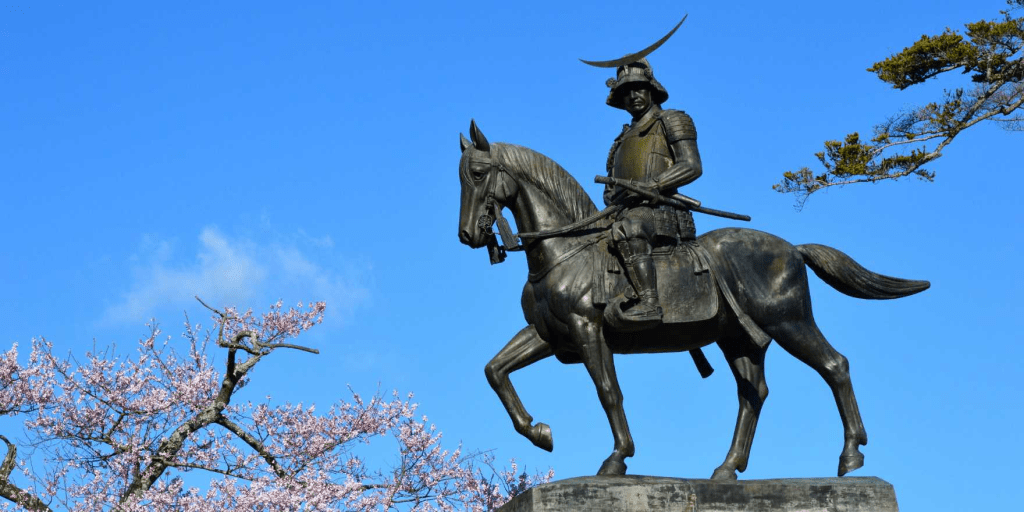
The One-Eyed Dragon And Walking Your Own Path

A young man glared at his reflection in the mirror. The reflection, half-obscured by a mane of thick black hair, glared back. The young man swept his hair out of his face, determined to face himself. Through distorted vision, he saw a boy with a bulging eye, a boy who was jeered, ridiculed, looked down upon as an abomination even by his own mother. A boy who’d been named the leader of his clan and who everyone expected to fail.

The young man continued to repeat the mantra he’d been telling himself again and again: You are Botenmaru no more. Your name is Date Masamune. Son of Tenamune. The right to lead this clan is yours by birth. Kill the boy and let the man be born.

Continue reading “The One-Eyed Dragon And Walking Your Own Path”

Pop Culture and Japan

This Japanese Philosopher Helped To Change The History Of Japan

The Enlightenment of the seventeenth and eighteenth centuries is marked as a watershed moment in Western history. An age of reason and scientific discovery, it gave rise to new ways of thinking, solidified the reputations of intellectuals like Isaac Newton and Voltaire and cast away the metaphorical blackness and superstition of the Dark Ages.

A century later, Japan went through its own Enlightenment, gathering knowledge from the West and building itself into a world superpower within a relatively short amount of time. The Japanese Enlightenment period of the nineteenth century was an era of radical thinkers and intellectual wayfarers, explorers who were willing to throw caution to the wind and expose themselves to alien cultures on behalf of their country. A man who was critical to shaping modern Japan was a key figure in this period. His name was Fukuzawa Yukichi.

A philosopher, writer, statesman, teacher and entrepreneur, Fukuzawa became a bridge between worlds for transmuting Western ideas into a Japanese mindset. He built his philosophy upon the nature of civilisation, identity and freedom, a philosophy that’s been grafted into the infrastructure of modern Japanese society.

Continue reading “This Japanese Philosopher Helped To Change The History Of Japan”

Pop Culture and Japan

Shadow Games

Kyoto. The seat of power in Japan. A seat ripe for the taking for those who have the will and strength. Katashi, a general in the service of the great daimyo Oda Nobunaga, muses that his lord will soon be sitting in that seat.

Katashi has spent the last day in the city gathering intelligence, getting the lie of the land and listening for the movements of other warlords roaming throughout the countryside, enemies of the Oda who would take everything the clan has fought to build. Two names continue to rise the highest among the din: Takeda Shingen, the Tiger of Kai, and Uesugi Kenshin, the Dragon of Echigo. Both men aren’t to be underestimated and Katashi plans to deliver news of their movements to Nobunaga. As soon as he’s finished enjoying all the pleasures the city has to offer on his week-long stay.

A man of large appetites, the general struts through the pleasure district of Kyoto with his men, drinking their way through tavern after tavern. After a while, Katashi directs them towards a brothel and as they stagger into the place, the general calls to the madam to show him her wares.

Continue reading “Shadow Games”

Pop Culture and Japan

Copywriting Lessons From The Father Of Japanese Short Stories

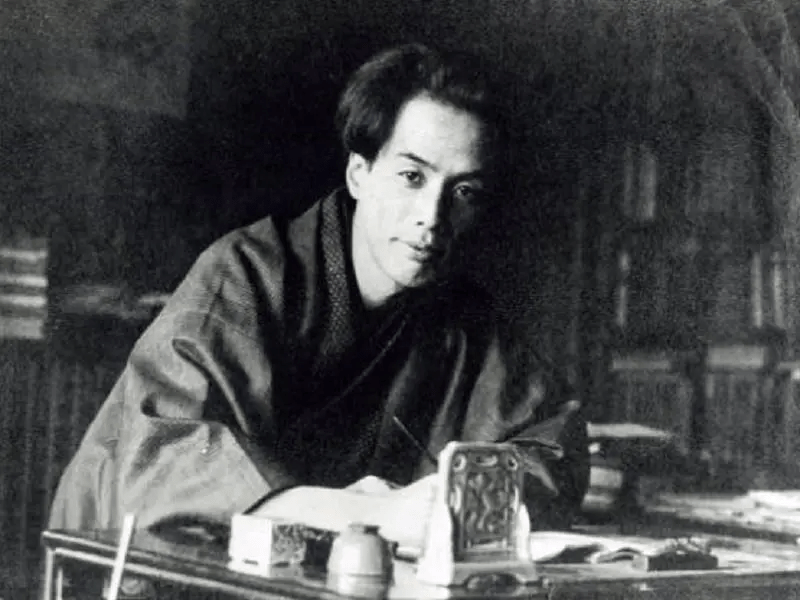
He was upstairs in a bookstore.

Twenty years old at the time, he had climbed a ladder set against a bookcase and was searching for the newly-arrived Western books: Maupassant, Baudelaire, Strindberg, Ibsen, Shaw, Tolstoy…

This is the opening paragraph of a short story called The Life Of A Stupid Man by Ryunosuke Akutagawa.

This paragraph hooked me into the work of the father of the Japanese short story because of the author’s vulnerability.

His short stories offer several mental health and creative insights:

Continue reading “Copywriting Lessons From The Father Of Japanese Short Stories”

Mental health essays · Pop Culture and Japan

The Father Of Japanese Short Stories & The Man-Made Wings Of Mental Health

There was once a man who flew too high to the sun. Not the sun as you and I know it, it was a sun of his own making, the distant light of intellect that he wished with all his heart to grasp for, but always seemed obscured by the darkness that he carried inside of himself. He was 29 years old when he chose to soar into the sky, to search for the brightness he couldn’t find in his life.

He built his wings off the backs of philosophers like Rousseau and Voltaire, philosophers who revealed the contradictions of his soul. On one side, he embodied the passion for humanity, the yearning for freedom of the former. On the other side, he embraced the unshakeable belief that unchecked optimism was something to laugh at, as the latter intended.

Painfully aware of the contradictions, the man found relief in the sky. The closer he got to the sun, the closer he got to himself. His true self. The self that wanted to live with such intensity that he could die without regret. But in the back of his mind, he couldn’t shake the image of being a comic puppet, dangling by the strings of the universe. For a fleeting moment, he’d been cut free, and all the responsibilities of his life seemed so small and inconsequential, somewhere far below him. His aunt. His wife. His children. His family. They were all very far away.

He didn’t know how long he went on flying. Or if he ever reached the sun. The wind screeched in his ears and a single thought flashed through his mind: It is unfortunate for the gods that, unlike us, they cannot commit suicide.

Continue reading “The Father Of Japanese Short Stories & The Man-Made Wings Of Mental Health”

Japanese Cuisine

How You Can Follow In The Footsteps Of One Of Japan’s Greatest Sushi Chefs 

Japan, 1934.

A 9 year old boy is told by his family to leave home and find a job because they’re so poor. 

His name is Jiro Ono.

At the time of the Great Depression, where so many children need to grow up fast and fight for the right to earn a job they have no guarantee of keeping, Ono is determined to succeed no matter what. 

Continue reading “How You Can Follow In The Footsteps Of One Of Japan’s Greatest Sushi Chefs “

Japanese Mythology · Pop Culture and Japan

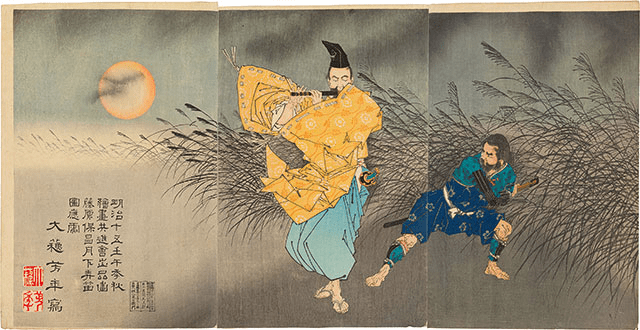
The Last Ukiyo-e Painter & The Fight For Preservation

This is a chapter from my book Japanese Fighting Heroes: Warriors, Samurai and Ronins. Pick up a copy here.

I love art. Walking around galleries and observing paintings is not only a therapeutic exercise, it’s an opportunity to soak up a piece of the artist’s story. Art is a window into the mind of the person who created it and their essence is left behind in the subject matter.

Japan has no shortage of wonderful art and Japanese ukiyo-e is my favourite genre for the distinctive style and beauty that goes into making it. Translating to pictures of the floating world, ukiyo-e are woodblock paintings and scenes that depict the pleasure districts, geisha, actors, wrestlers and decadence of the Edo period.

This style of art flourished for hundreds of years until it faded with the hero of this chapter: Tsukioka Yoshitoshi. Considered to be the last of the great masters, Yoshitoshi kept ukiyo-e alive for as long as he could against an invasion of Western technology and disciplines like photography and lithography. Before we visit the end of ukiyo-e, we must go back to the start.

Continue reading “The Last Ukiyo-e Painter & The Fight For Preservation”

Pop Culture and Japan

Kika Sai

The Kimura Brewery blossomed with the aroma of steamed rice escaping from the fermentation tanks. To Mariko, it was the smell of a new sake season, of memories, of simpler days brought to life. She strolled by the tanks, making conversation with the kurabito, asking how they were and the health of their families.

No member of the team was left out. Mariko stopped by the koji room and had the familiar sensation of stepping into a sacred place. The heat inside the room felt pleasant on her skin, like basking in an onsen bath. The workers bowed politely in greeting and she returned the gesture, indicating that they could continue.

Each man worked in union, walking up and down the line of trays, sprinkling mould onto the rice in perfect synchronicity.

It was like watching a graceful dance unfold, every movement choreographed to the rhythm of music only the men could hear. Her ritual complete, Mariko went to the upper floor of the brewery to her office.

Continue reading “Kika Sai”